
Chameleon Escape: Hide & Seek
Flynt GamesRole Playing
4.35.00 Reviews
- Version
- 1.1
- Installs
- 100.00K
- Age Rating
- Everyone
Screenshots

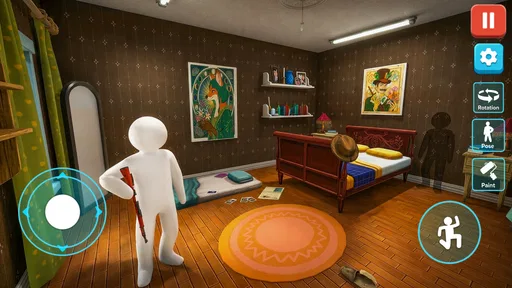
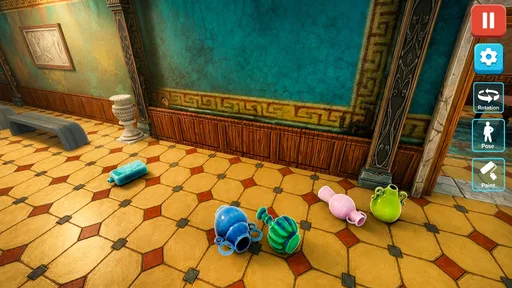
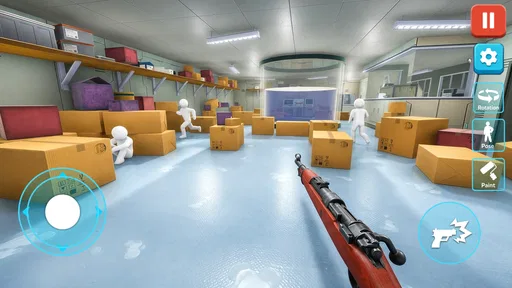



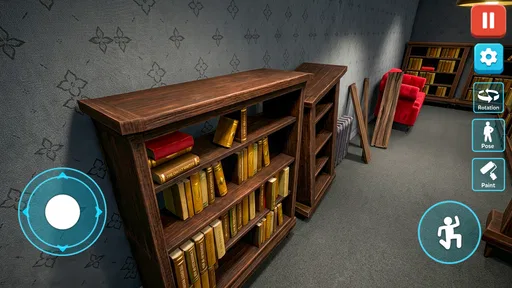
Our Review of Chameleon Escape: Hide & Seek
 Analysis by Appyee
I went into Chameleon Escape: Hide & Seek expecting a small, easy-to-understand role-playing game, and that is exactly where its appeal begins. The idea is immediately readable: use camouflage, find a hiding place, and try to stay ahead of the seeker. It does not ask me to learn a complicated story or study a long list of systems before I can enjoy a round. Instead, it focuses on the simple tension of being visible for a moment, disappearing into the surroundings, and deciding whether to stay safe or risk moving again.
That simplicity makes it a natural fit for short play sessions. I can imagine opening it while waiting for an appointment, taking a quick break, or handing it to someone who wants a game that explains itself quickly. At the same time, the hide-and-seek idea gives each encounter a little more thought than a purely passive casual game. The important question is not only where to hide, but when to move, how much exposure is acceptable, and whether a tempting escape route is worth the danger.
How the game feels in everyday play
I find the everyday appeal of Chameleon Escape lies in having a small, clear decision to make rather than a long session to manage. A useful way to approach a first round is to focus on one choice at a time: notice the immediate risk, pick a place to pause, then decide whether moving has a real purpose. That mindset makes the opening less hurried and sets up the next step: learning which early assumptions are most likely to trip up a new player.
A quick start with a clear central challenge
The strongest part of the design is its immediate focus. Chameleon Escape is built around blending in and avoiding detection, so the player understands the goal without needing a lengthy tutorial. That is useful on a phone because the game can be picked up without the mental commitment demanded by a large role-playing adventure. I do not need to remember a wide cast of characters or manage an elaborate inventory before the basic fun begins.
The chameleon theme also gives the game a distinct identity. Many mobile role-playing games lean on battles, character upgrades, or long quest chains. Here, the fantasy is more about observation and timing. I am encouraged to think about the environment rather than simply overpowering an opponent. That change of emphasis is small but meaningful: success feels connected to patience and awareness instead of only to stronger equipment or higher numbers.
For new players, the accessible concept should be one of the biggest advantages. The content rating is Everyone, which matches the friendly, non-threatening premise. Parents looking for a game that can be understood quickly may find it easier to introduce than a combat-heavy role-playing title. I would still suggest that younger players try it with an adult nearby at first, not because the premise is difficult, but because the best way to understand a hide-and-seek game is to see how movement and hiding interact in practice.
Speed expectations and the value of short sessions
My first impression is that this is the kind of game where perceived speed matters more than a huge amount of content. A round should feel easy to enter and easy to leave, and the straightforward premise supports that rhythm. I would not approach it expecting the broad exploration or lengthy loading transitions associated with a major console-style role-playing game. Its strength is the small decision in front of me: hide now, wait, or make a move before the seeker closes in.
That makes it particularly suitable for phone use. A game with a simple objective can feel responsive even when I only have a few minutes. I can concentrate on one attempt instead of worrying that I will be interrupted halfway through a long mission. This is also where the free price helps: there is little commitment involved in trying it, and the game’s basic concept can be understood almost immediately.
One practical tip is to play the first few attempts as observation rounds rather than chasing a perfect result. I pay attention to how much time I have to react, which hiding choices seem safest, and whether moving early creates more opportunities than waiting. This approach is more useful than rushing through the opening attempts, because the central skill is reading the situation. Once I understand the rhythm, I can make decisions more deliberately instead of treating every escape as a panic response.
What happens during heavier play
Longer sessions reveal a trade-off. The focused design is convenient, but it also means the game does not have the same variety as a large role-playing adventure with several unrelated activities. If I want a deep story, extensive character building, or a large world to explore, this is probably not the right choice. The hide-and-seek loop needs to remain interesting through changing decisions, not through a constant stream of new genres and systems.
That is why I see it working best in bursts. A few rounds can be satisfying because each attempt invites a different choice about concealment and movement. After a longer stretch, players who need major progression or a strong narrative may start to feel the limits of the compact concept. This is not a flaw in the premise, but it is an important expectation to set before downloading it.
A useful way to avoid that fatigue is to change the goal of each session. In one attempt, I might prioritize staying hidden for as long as possible. In another, I might take more risks and study how quickly a bad decision can be recovered from. Treating the game as a small strategy exercise, rather than demanding endless new content from it, makes the central loop feel more purposeful.
Stability, recovery, and the practical phone experience
Chameleon Escape is currently at version 1.1, and that gives me a simple reason to keep expectations realistic: a relatively early version can feel focused while still leaving room for refinement. I would make sure the game is updated before judging it too harshly, especially if an issue appears during installation or a session. Restarting the game after an interruption is also a sensible first recovery step for any mobile title.
I do not treat a short interruption as proof that the whole experience is unreliable. Phones vary widely in available storage, background activity, and operating-system behavior. If the game stops responding, my practical sequence would be to close it, reopen it, and then check whether other demanding apps are running at the same time. That is ordinary mobile troubleshooting, but it matters more in a game built around quick reactions: losing a moment because the phone is busy can be more frustrating than losing because of a poor hiding decision.
The game’s audience size suggests that it has already attracted meaningful attention, with over one hundred thousand installs and an average score of 4.3 from around one thousand two hundred ratings. Those figures make it easier for me to recommend trying it, but they do not guarantee identical performance on every device. Reviews can reflect enjoyment of the concept, while actual smoothness still depends on the phone and its software environment.
Device constraints and who should be careful
The minimum operating-system requirement is Android 7.1, so owners of older Android phones should check compatibility before planning around it. That requirement is not especially demanding by modern standards, but a compatible operating system does not automatically mean a perfect experience. A phone with limited free storage, aggressive background-app management, or an aging battery may still behave differently from a newer device.
I would be most comfortable recommending it to people who want a lightweight-feeling game concept and do not need the visual scale of a premium role-playing release. The game’s appeal comes from the hide-and-seek interaction, so I would rather see players use a stable, comfortable device than chase maximum graphical complexity. If a phone is already struggling with everyday apps, closing unused programs before playing is a sensible habit.
For iPhone users, the important point is to confirm that the version available for their device matches their operating-system situation before expecting the same experience. The listed minimum requirement is specifically expressed for Android, so I would not assume that an older iPhone will behave identically. That is a small but useful distinction for anyone choosing between devices or deciding whether to install immediately.
Three ways to get more from the hide-and-seek loop
The first non-obvious lesson is to separate hiding from escaping. A hiding place may keep me safe for a moment, but it is not necessarily the best route to the finish. I try to think in two stages: first, where can I avoid immediate attention, and second, where can I go next if the seeker begins checking nearby areas? Planning that second position makes the game feel more strategic and reduces the temptation to move without a reason.
The second is to treat movement as information gathering. A cautious move can reveal how much freedom I really have, even if it does not lead directly to success. I use early attempts to learn which choices create pressure and which ones leave room to recover. This is more efficient than repeating the same hiding pattern, because a failed attempt can still teach me how aggressively I can act in the next one.
The third is to avoid confusing speed with progress. Moving constantly may feel active, but the chameleon idea rewards controlled decisions. I get better results when I pause long enough to understand the immediate danger, then move with a specific purpose. That is a useful distinction for players who normally prefer fast arcade games: the challenge is not simply reacting quickly, but reacting at the right moment.
How it compares with familiar role-playing alternatives
Compared with a traditional mobile role-playing game, this one is much easier to approach but much narrower in scope. A conventional RPG may offer battles, quests, equipment, dialogue, and a long-term character journey. Chameleon Escape instead gives me a concentrated stealth-and-evasion idea. If I want a story I can follow over many hours, another role-playing game will probably be more satisfying.
Compared with a standard action game, it asks for less constant input and more restraint. Players who enjoy watching patterns, choosing safe moments, and testing the limits of a hiding spot may prefer it to a game based on rapid attacks. On the other hand, anyone who wants continuous combat or a strong sense of power growth may find the slower decision-making less exciting.
It also differs from ordinary multiplayer-style hide-and-seek expectations. I would not download it assuming that the main appeal is social competition or communication with other players. The premise itself is enough to create tension, but people specifically searching for a party game should look for an experience built around direct interaction with friends. This title makes more sense as a personal, compact challenge.
Who should install it, and who should skip it
I would recommend it to casual players who like simple rules with room for better judgment. It is a good candidate for someone who enjoys stealth themes but does not want a complicated action game. It may also suit families looking for an Everyone-rated role-playing game with a gentler premise, provided the device meets the operating-system requirement and the player is comfortable with repeated short attempts.
I would be more cautious about recommending it to players who need a substantial narrative, deep customization, or a large amount of content before they feel satisfied. The same focus that makes the game approachable can make it feel limited to someone expecting a full-scale RPG. Competitive players may also want to look elsewhere if their priority is direct social play rather than outsmarting an in-game seeker.
There is another practical audience: people who enjoy experimenting. The game gives me a reason to compare cautious and risky approaches, and that makes it more interesting than the store summary alone suggests. I can play it as a quick diversion, but I can also use each attempt to refine a personal strategy. That extra layer is where the title earns its place beyond being a one-idea novelty.
My performance verdict
After considering the way it is designed, I see Chameleon Escape: Hide & Seek as a focused mobile role-playing game rather than a demanding technical showcase. Its likely strength is the quick connection between input and outcome: I make a hiding or movement decision, then immediately see whether that judgment worked. The free price and Everyone rating lower the barrier to trying it, while the simple premise makes it easy to explain to another player.
The main limitation is equally clear. A compact hide-and-seek loop cannot replace the variety of a full RPG, and longer sessions may expose that narrow focus. I would also avoid promising identical stability across every phone, since the Android minimum requirement only tells me the oldest supported software boundary, not how every older device will perform. Keeping other apps closed and giving the game a clean restart after a problem are sensible habits.
Flynt Games has chosen a concept that is easy to recognize but still leaves room for judgment. With over one hundred thousand installs and a 4.3 average, it has enough early interest to justify a trial, especially because there is no purchase price to overcome. My recommendation is straightforward: install it if you want short, readable rounds built around camouflage, patience, and escape. Skip it if you are looking for a deep story, extensive progression, or a social party experience. Its best quality is the small tension created by deciding when not to move.
Verdict
Strengths of Chameleon Escape: Hide & Seek
- Simple controls make it easy to start playing immediately.
- Short rounds suit quick gaming sessions on mobile.
- Hiding mechanics create tense and entertaining moments.
- Bright visuals make characters and obstacles easy to recognize.
- Progression encourages players to improve their timing and strategy.
Limitations of Chameleon Escape: Hide & Seek
- Gameplay can become repetitive after several rounds.
- Difficulty may feel uneven as levels become more challenging.
- Ads may interrupt the experience between gameplay sessions.
- Limited customization reduces long-term personalization options.
- Some levels rely heavily on trial and error.
Similar Picks in This Category
View All
Hair Dye
CrazyLabs LTD4.4

Monster High™ Beauty Salon
CrazyLabs LTD4.5

Bus Simulator - Bus Games 3D
Jima Apps4.4

Flight Pilot: 3D Simulator
Wildlife Studios4.1


Super Stylist Fashion Makeover
CrazyLabs LTD4.4
Frequently Asked Questions
What is Chameleon Escape: Hide & Seek?
Chameleon Escape: Hide & Seek is a casual stealth game built around the classic hide-and-seek idea. You control a chameleon that must blend into the environment, avoid being discovered, and reach safety or complete the level objective. Its simple controls make it easy to start, while changing locations, obstacles, and enemy movement add variety to each round.
How do you play Chameleon Escape: Hide & Seek?
Gameplay generally focuses on moving carefully through compact levels while using camouflage and the surroundings to remain unnoticed. Players need to observe patrol routes, choose the right moment to move, and avoid exposing the chameleon in open areas. Depending on the stage, timing, hiding spots, and quick reactions can all be important for escaping successfully.
Is Chameleon Escape: Hide & Seek suitable for children?
The game is generally suitable for players who enjoy light, non-violent casual gameplay. Its hide-and-seek theme is easy to understand, and the colorful presentation is more playful than intimidating. However, parents should still check the current age rating, advertising, and in-app purchase information on the relevant app store, since these details can vary between Android and iOS versions.
Does Chameleon Escape: Hide & Seek require an internet connection?
Whether an internet connection is required may depend on the version and the features available in the current release. Basic levels may work offline in some builds, but advertisements, analytics, updates, rewards, or other online services can require connectivity. Before traveling or playing without data, it is best to test the installed version in airplane mode.
Is Chameleon Escape: Hide & Seek free to download?
Chameleon Escape: Hide & Seek may be available as a free download, but users should review the store listing before installing because monetization can include advertisements, optional purchases, or other limitations. Free access does not always mean every feature is unlocked. Check the listed permissions, payment information, and recent user reviews to understand the experience offered on your device.
Play our best games!


